Wednesday, October 24, 2012

Wellness Wednesday: Financial Health and Energy Efficiency


All my life I have known there is a ‘bigger picture’ when it comes to total wellness. Not only are we nourished by the foods we eat by also by our experiences in our daily lives. According to Wikipedia (gotta love a Google search), ‘holistic health is a concept in medical practice upholding that all aspects of people’s needs, psychological, physical and social should be taken into account and seen as a whole’. I believe that good health comes from a balance of nutrition and lifestyle factors and even takes into account financial health. Most people at one time in their lives have probably been affected by poor financial health. Maybe it was when mom and dad finally cut you off or the time when you were let go from your job; either way, it is amazing how much of a negative toll it can have on your physical health. Just as smart nutrition choices lead to a long and healthy life, good financial investments can also help you reap the rewards down the road.

You may remember my electric lawnmower post
from a few weeks back in which I announced one, that I am (finally) engaged and two, that my fiancĂ© and I bought a house. Talk about stressful finances! In reality, the home purchase was a wise investment. Our apartment rent was costing more than what our mortgage payments will be and we finally get to have a say in what will make our house a home (backyard vegetable garden, composter, bocce ball court, and painted walls oh my!). While I can’t wait to check off my project list, I do recognize that this home is ours and will be ours for a very long time if not forever. A lifetime of projects: my dreams and nightmares all rolled into one. Whenever I find myself in a situation in which my pulse begins to race and I can’t seem to shut my mind off at the end of the day, I like to ask myself ‘what would you tell your health coaching clients?’

#slowdownjustbreathe.

One thing at a time and when it comes to wise home investments I have learned in my time at SJVCEO that energy efficiency is that first baby step that will set me up for a lifetime of financial health.

Just like that electric lawnmower, there are other ‘low hanging’ options I can make that will have a big impact on my wallet. First up we will be purchasing a clothes washer and dryer. Next will be a new oven, range, microwave, and then refrigerator – trust me, there will be large gaps of time in between purchases. I am sure you are thinking dollar signs and really, so am I; however, PG&E, my local service provider, offers rebates on many of these items when you purchase qualifying appliances. Sure a couple hundred dollars in savings doesn’t sound like a lot but when I know that these new, smarter, energy efficient appliances will save me in the long run on my utility bills I know that it is worth the investment. And, if I can control my spending habits and use those couple hundred incentive/rebate dollars as my own personal revolving energy fund I can do other projects such as weatherization that will continue to help put money back into my pocket all the while making our home energy efficient and better for the environment.  

Just as I think organic fruits and veggies are an investment in my long-term health and well-being so are these appliances when it comes to the health of our environment (and my wallet). Spend money upfront (qualifying appliances), save money down the road (cheaper utility bills), and know that you have done your small part in saving energy and reducing your carbon footprint.

--Maureen Hoff

photo credit: kenteegardin via photopin cc

photo credit: jbloom via photopin cc

photo credit: samsungtomorrow via photopin cc

Friday, October 19, 2012

Whitepapers: PV inverter performance in desert-like locations


Wow, unique desert challenges addressed through rigorous testing!

On April 25, 2012 SMA America, LLC publish a study on how outdoor installed PV inverters held up under extreme weather conditions found in the desert. Conditions such as sandstorms and enormous temperature swings produce a whole new set of challenges for developers of PV inverters. Dust and sand is prevalent in the ambient air and tends to create serious obstacles in solar PV inverters installed outdoors, but with the new technology developed and rigid testing the inverter’s seals protected it from harmful dust deposits.

I don’t know about you but this stuff gets me excited. I’m really enjoying watching alternative energy develop in front of me.  We are indeed watching history in the making, but let’s not forget that energy conservation, although not the most attractive option is the best way to become energy independent. Check out the full story at the link below.


--Dee Cox

Photo credit: http://www.flickr.com/photos/walmartcorporate/5249870103/

Thursday, October 18, 2012

Believe it or not: liquid batteries make energy storage real and affordable

The headline from the Massachusetts Institute of Technology (MIT) says, "It's Official: Wind Energy Can Be Stored Cheaply"' but gosh--cheap just sounds so...cheap.  Energy storage is more than just a cool advancement in technology, it is the Holy Grail. Grid level storage will make alternative and renewable energy available to the mass market with regularity and at a truly affordable rate. It's energy storage that will make harnessing temperamental energy sources like wind and solar plausible as a solution to our world energy needs.  It's energy storage that is the missing link.  To include cheap in the sentence seems somewhat demeaning ( although it is a press release from MIT and if Good Will Hunting taught me anything it's that those MIT guys know their stuff!).

Turns out one MIT guy in particular knows his stuff about grid level electrical storage and how to make it cost effective. Professor Donald Sadoway has developed the liquid metal battery; a device as he says, invented to the price point of the electric market.  Professor Sadoway's TED talk about his liquid metal battery is entertaining (colored chalk!) and actually makes simple sense of something that should be much more complicated.  


Donald Sadoway: solving energy's biggest challenge, like a boss. 

Wednesday, October 17, 2012

Wellness Wednesday: Waste, your waist, & a song about recycling


Who would have thought that the little song I crafted back in early 1990s for an Odyssey of the Mind sketch would still be haunting me today. Only I could have come up with embarrassing lyrics that went a little something like, ‘R-E-C-Y-C-L-E, find out what it means to me!’ and watch my teammates perform them on stage because there was NO WAY I would be caught dead doing that. Too bad I didn't know Courtney back then because I am sure she would have been up to the task. After all, I somehow got her to meow at a small bird trying to eat her dinner.[note from Courtney: this is true.  It was a fat, rude bird that was not intimidated by meowing] Anyway…

An email floated across my desk just the other day explaining how Governor Jerry Brown has signed new restrictions on California’s bottle bill. In a nutshell this bill serves two main points: one, deter those cheater, cheater, pumpkin eaters from crossing state lines, importing bottles, and exploiting the system; and two, encourage (fair) recycling. When consumers purchase canned or bottled beverages and some packaged food products, they pay a fee. This fee can then be redeemed upon recycling. I remember gathering all the cans and bottles our family would accumulate and taking them to the recycling center with my dad. For our efforts he would let me keep the few bucks we received in exchange for our waste.

minimize waste = minimized waist
In addition to the benefit of the spare change as a reward for recycling, it is important to note that recycling can help to save energy. Making something from scratch takes far more energy and produces much more pollution than if a manufacturer were to use recycled materials. The best solution, however, is to simply use less. Yes, we are talking about those three R’s – reduce, reuse, recycle – and you can bet that was incorporated into my song. Not only does cutting down on what you use help to shed those pounds of greenhouse gas emissions, it can also help to shed those unwanted pounds of fat on your body! This is Wellness Wednesday, people. You should have expected that.


While it sounds silly, it is true. Packages, boxes, bags, cans, and bottles mean extra trash and a greater carbon footprint. They also signal that a food item has been processed and this typically means chemicals, preservatives, and sugar. Stick to Mother Nature’s packaging and opt for foods that come in their natural state – think fruits, vegetables, nuts, seeds, and whole grains. Try to shop the bulk section of your grocery store and when you have to use packaging opt for the biodegradable brown bags over plastic.

So, no matter which waste/waist concerns you more you should always practice those three R’s and you (and the planet) will be reap the rewards.  

photo credit: MonotonousSarah via photopin cc

photo credit: matt.hintsa via photopin cc

Photo from California Integrated Waste Management Board

photo credit: bcmom via photopin cc

Monday, October 15, 2012

Money Money: 10 ways to save on heating bills


California has been having an extended summer, especially here in the San Joaquin Valley where we've been experiencing 95+ degree temperatures into October, so late last week I got ready for work and put on a sundress.  To my surprise it had rained and my car--which of course was just washed the day before--was wet! 

Hmm, perhaps the sundress was a poor choice?

The quick turn to real fall weather got me to thinking about the impending winter, and since my job is what it is my thoughts immediately turned to my winter energy bills and what I can do now to save this winter.  

Here are 10 things you can do right now to help lower your energy costs this winter:

1. Check Your Insulation. If you haven‘t looked in your attic lately (or ever!) then get up there and take a look around to make sure the insulation is in good condition. Make sure there are enough air pockets to trap cold air. Old insulation can become brittle and ineffective so if your insulation is not doing the job it might be worth the time and energy to replace it.


2. Check Your Windows. You can lose a lot of heat through the cracks around your windows and the windows themselves. Check each window and make sure it is well sealed. You can buy kits that will help you test this. Be sure to caulk and seal around windows where you find leaks, and replace any interior seals that are damaged. If your windows are old, it might be worth the money in the long run to replace them with new triple pane replacement windows.

3. Weather Proof Your Entryways. Along with the windows, check your doors for drafts. Using weather stripping around the doors will help keep your heat from leaking out and the cold from getting in. 

4. Get a Ceiling Fan. Just like you learned in 4th grade - heat rises so you want to keep the warm air down in the room, especially if you have high ceilings. Most ceiling fans have a switch to reverse the direction so you can use them for cooling in the summer and pushing hot air down in the winter. Be sure you run it in the right direction or you might end up with cold air in the winter and warm in the summer!


5. Shut Off Unused Rooms. If you have a room or rooms that you don‘t use, keep the doors shut. Try to remember to shut doors if you will be in the room for a long time. Rooms which are used only sometimes will have the door fanned which allows cold air to escape into your others rooms. This, in turn, will make your furnace work harder and increase your heating costs.

6. Let The Sun Shine In. On sunny days, open your curtains and mini blinds but make sure you close them when darkness falls or on cloudy days. Getting insulated curtains can help keep out drafts from around the windows.

7. Get A Door Alignment. Over time, doors can sag and get out of alignment. Take a good look at your doors to see if they still fit in the casing properly. If they don‘t then adjust them for a tight fit.

8. Have Your Furnace Checked. Spend the money to have a professional give your furnace a checkup to be sure it is working at peak performance. This is important not only from a cost perspective but also from a safety perspective. A system that is not running as efficiently as it can cost you money in heating bills so the money to have it inspected will be well spent.

9. Change Your Air Filter. Air filters can get clogged with ends up costing you money in fuel - it causes your heating system to run inefficiently and can be a safety hazard. Changing out the filter once a year is a good idea and something you can do yourself with minimal cost.

10. Close Your House Vents. House vents allow circulation of air during the warmer months but it’s a good idea to close them at the end of fall before the real cold weather comes. Cold air seeping in can drive up heating costs and make your house feel drafty. (Best not to use a cat to close the vents, but in a pinch it will work!) 

Taking the time to follow a few of these tips will result in lower heating bills. Also, check out your energy providers’ web site for suggestions on how to practice energy efficiency and save money at the same time.

For those in the San Joaquin Valley ere are links to PG&E, Southern California Edison, and Southern California Gas Company. All three sites have great suggestions on saving energy. Of course, you can always find energy and money savings tips over on our website for VIEW the Savings! 


--Dee Cox


photo credit: Flicker Clicker via photopin cc


photo credit: baslow via photopin cc

photo credit: Maia C via photopin cc

photo credit: kightp via photopin cc

photo credit: mollyali via photopin cc


Thursday, October 11, 2012

Believe it or not: It's Energy Action Month!


Here at the SJVCEO, we have fun doing what we do.  Now, let's clarify: what we do is not always fun or exciting because sometimes it's difficult and just plain frustrating-- but, we always do everything we can to make sure even in the less than great times we keep it positive.

Well, let me tell you--when Team SJVCEO heard that President Obama had proclaimed October National Energy Action Month we felt like throwing on our best pastels and hitting the street with Lionel!


Believe it our not, it's Energy Action Month! 

As for the official word, here it is: 

NOW, THEREFORE, I, BARACK OBAMA, President of the United States of America, by virtue of the authority vested in me by the Constitution and the laws of the United States, do hereby proclaim October 2012 as National Energy Action Month. I call upon the citizens of the United States to recognize this month by working together to achieve greater energy security, a more robust economy, and a healthier environment for our children.

IN WITNESS WHEREOF, I have hereunto set my hand this first day of October, in the year of our Lord two thousand twelve, and of the Independence of the United States of America the two hundred and thirty-seventh.

Now, our team thinks the messaging could have been more effective if the White House had used Lionel Richie as the official ambassador of Energy Action Month, but we get that they're a little busy and didn't have time to consult with us on the roll out.  We'll forgive the oversight, this time, mainly because we're too busy dancing along...you guessed it...All Night Long! 

Wednesday, October 10, 2012

Wellness Wednesday: The Joys of Home Ownership

My fiancĂ© (whoa…still getting used to saying that one!) and I are a few short weeks away from closing escrow on our first home. It has been such an exciting time but the closer we get the more I feel like reality is slapping me in the face! Our home was built in 1949 and is absolutely adorable if I do say so myself; but, with age comes some serious maintenance issues. My ‘to-do’ list…wait, let’s get real…my ‘to-buy’ list is ever-growing. While I would love to purchase that gorgeous light fixture for the dining room and start in on my painting (Courtney Kalashian, you can count on the fact that there will be stripes somewhere), I have to keep reminding myself that we must start with the basics before I bankrupt my soon-to-be husband and myself.

Call me a nerd, but the one item that sits at the top of our ‘need’ list is a lawn mower and I am so stinkin’ excited! I am sure that enthusiasm will go away once I actually have to push that thing across the large expanse of grass and realize that Patrick Dempsey isn’t going to drive meoff into the sunset on the back of his mower, but I am still giddy. Maybe I am misreading my emotions and I am actually just anxious to get this process over with and have those keys in my hands. Either way, when it comes to lawn mowers there are so many options out there but I feel I am obligated to do it the right way. The SJVCEO way. The Wellness Wednesday way. And so I begin my adventures in search of the perfect electric lawn mower.

Not only are electric lawn mowers quieter than their gas counterparts (my new neighbors will love me), they are also much better for our air quality (i.e. smaller carbon footprint) which means better health for you and me. Our friends over at the San Joaquin Valley Air Pollution Control District have even held electric lawn mower trade-in programs in the past in which Valley residents could replace their old gas-powered mower with a clean, electric mower for less than $100. I am hoping that in honor of me purchasing a home they will reinstate this program. Wink, wink. In the meantime, I have signed up online to receive email updates regarding this ‘Clean Green Yard Machine’ program. 

Another side bonus? Electric mowers will cost less than gas mowers in the long run. According to mowersdirect.com, summertime mowing will only cost about $5 in electric bills! No stinky gasoline. Cleaner air. Healthier lungs. More money in my pocket. Looks like I might be getting that light fixture after all!

--Maureen Hoff


Photo Credit: Mount, Thom (Producer) & Rash, Steve (Director). 1987. Can't Buy Me Love [Motion picture]/ United Sates. Apollo Pictures, Silver Screen Partners III, The Mount Company.

Tuesday, October 9, 2012

Smartphone Solutions for Energy Problems


While doing research on a completely different topic I ran across a study that predicts smartphone usage will increase by 2600% by the year 2020.  If that is truly the case what is in store for smartphone technology in our future? 

Well, by 2020 smartphones are predicted to replace cash and credit cards as the preferred payment method. However, what I found most interesting is the advances in gadgets that will save energy and pay for themselves in a relatively short time such as the smart and Apple-esque thermostat designed by Apple alumni and iPhone designer Tony Fadell. 

As reported on Green Tech Media, Tony’s “Nest” thermostat distinguishes between radiant heat systems, heat pumps, and forced air, with a thermostat profile optimized for each system type. There are temperature sensors, humidity sensors, and ambient light sensors. Power comes over existing thermostat wires, which makes it compatible with 85 percent to 90 percent of American homes. The team wanted to make the product beautiful but unobtrusive. It's fair to say that the team succeeded -- the thermostat is a sleek piece of design that clearly betrays its Apple roots.

Thermostats need to turn off at night and turn off when we go away. They do not command the emotional connection we have with smart phones. It will be an enormous challenge for Nest to recreate the excitement of an entertainment product in a utilitarian device like a thermostat. But these engineers have overcome enormous challenges in the past.

--Dee Cox

photo credit: Chris JL via photopin cc
photo credit: Nest via photopin cc

Monday, October 8, 2012

Money Monday: Why I Drive a Nissan Leaf Electric Car


It's another Money Monday Guest Blog!  Woo hoo!  Friend to the SJVCEO, Tom Cotter shared this fantastic story that he originally wrote for Green Car Reports.  Learn how Tom is not only doing his part for our environment, but how he's helping out his bank account too--all by making the choice to drive a Leaf!  

Although, I still love my Prius I may consider talking my husband into the Leaf...

Why I Drive a Nissan Leaf Electric Cat: One Owner's Story
Every day I get in my car and drive to work, I'm saving money.

That's because last summer I bought an all-electric 2011 Nissan Leaf, and my gas station stops are a thing of the past.

I figure I'm saving about $3,300 in annual gas and oil change bills, compared to the average Ford Expedition driver.

The average electricity cost to power my Leaf is about $870 less than what my Prius-driving friends spend at the pump.

That's hard-earned money I can use to take my wife and three kids out to dinner once in a while.

I'm glad I no longer depend on oil to drive, but I didn't make this decision lightly. As a minister in my previous life, I know that I have a biblical and moral responsibility to take better care of the earth.

It was especially heartbreaking for me to learn that much of the pollution in our air and contamination of other natural resources result in severe consequences that disproportionately affect the poorest among us.

As I learned about the challenges and real opportunities for improvement, I was motivated to begin making some changes, including in my family's energy and transportation choices.

The good news is that we can make the right choices by changing how we use energy. Driving an electric car is one of the most efficient ways to reduce energy use and decrease pollution.

But that doesn't mean sacrificing our lifestyles. Switching to clean transportation like electric cars can be surprisingly fun.

In fact, driving my Leaf is sort of a "Zen" experience, quiet and full of push-you-back-in-your-seat torque. Almost everyone I meet wants to drive it.

Just ask my kids. You give them a choice between my Leaf and my wife's alternative-fuel VW Jetta sedan, and there's not much competition; it's Daddy's car every time.

What's great about electric cars is they are only getting better and more efficient. There are more and more charging stations cropping up in town.

My car's 70- to 110-mile range between charges is plenty for our needs. I can charge at home when I'm sleeping or even at the office.

I'm a firm believer in moving aggressively toward using available and realistic clean energy sources. I've seen it work again and again, both in my job and first-hand at my own solar-powered home in Clovis, California.

For me, driving a clean car is about two different kinds of green: the greening of the planet and of my wallet.

Once I looked at the numbers and benefits of driving electric, not even counting solar, it was a no-brainer. I know more and more Americans will be joining me in this all-electric car revolution.

So when I wake up in the morning, I look out in my driveway and smile. I'm doing my part to help reduce climate-changing greenhouse gases and improve air quality.

Plus, I'm making life better for my family by protecting our bank account.

That's a clean energy future I can support.

Tom Cotter is a renewable energy evangelist, social entrepreneur, activist, trained presenter for the Climate Reality Project, and ordained minister. Professionally, Tom is Regional Sales Manager at Real Goods Solar. He is Chairman and President of the International Green Industry Hall of Fame and serves on the boards of both the Solar Living Institute and Restore Hetch Hetchy. This is his first story for Green Car Reports.

photo credit: Tom Cotter
photo credit: Stephen Rees via photopin cc

photo credit: OregonDOT via photopin cc

Friday, October 5, 2012

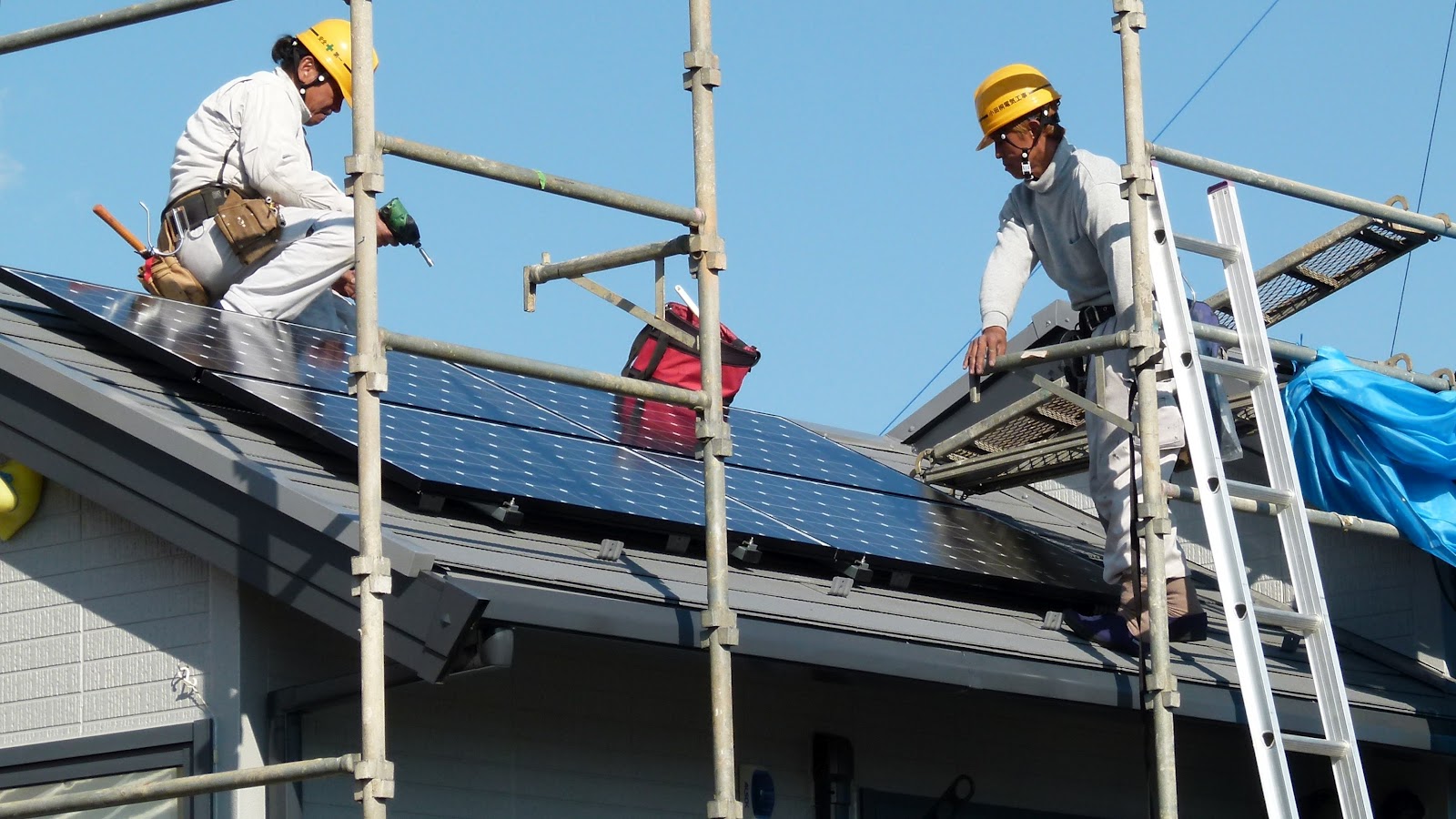
Who? How? When? Is Solar ever going to be really affordable?


Recently I checked out how much it would cost me to put solar on my house. To my surprise, it was much more than I wanted to spend, especially since I’m not convinced that I really want to stay there for more than five more years. The economics of it just didn't add up. I had question like: Who would pay for the remaining balance if I decided to sell the house before the solar units were paid for?  Would the house actually meet an appraisal value that would include the cost of solar in the sales price? 

Unfortunately, the financing options for me weren't exactly attractive and leasing didn't appeal to me either.  Lucky for me and you, the Department of Energy (DOE) has just launched a new competition that could solve my problem.


The DOE has developed the SunShot Initiative, a collaborative national initiative to make solar energy cost competitive with other forms of energy by the end of the decade.  The first step in this aggressive endeavor focuses on removing municipal barriers such as permitting and structural engineering cost (which SJVCEO is a named partner with Optony, Inc.under The Solar Roadmap). 
Now, the DOE is going one step further by launching the SunShot prize competition, a very unique competition. This competition is working to install solar energy systems at a fraction of today’s price. The SunShot Initiative is reducing the installed cost of solar energy systems by about 75% and will drive widespread, large-scale adoption of this renewable energy technology while restoring U.S. leadership in the global clean energy race.


-Dee

Photo Credit:  http://www.flickr.com/photos/cocreatr/5387532886/